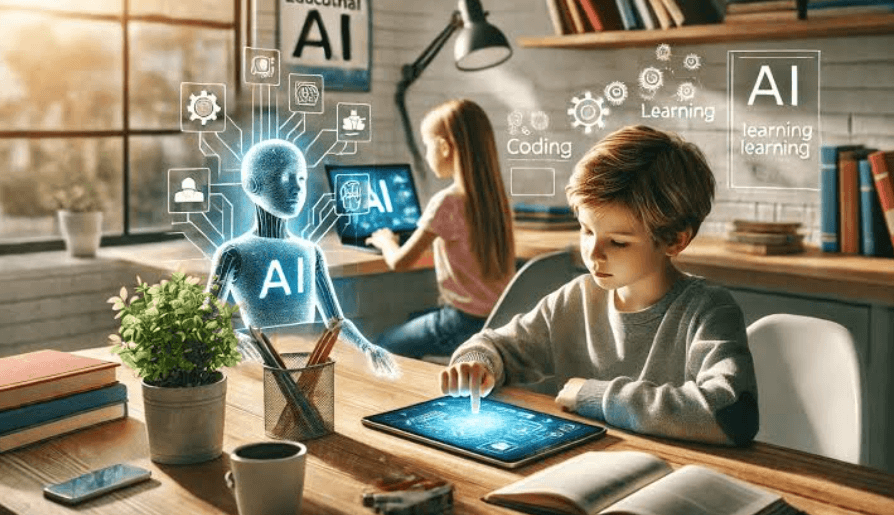

Artificial intelligence is becoming an increasingly common part of education, giving students access to new ways of learning, practicing skills, and exploring ideas. From interactive tutoring platforms to writing assistants and adaptive learning applications, AI-powered tools are helping learners engage with educational content in more personalized and flexible ways. While traditional classroom instruction remains the foundation of education, AI has emerged as a valuable resource that can complement the work of teachers and provide students with additional support beyond the school day.
The growing availability of AI tools does not mean technology replaces educators or independent thinking. Instead, AI works best when used responsibly as a learning aid that encourages curiosity, reinforces understanding, and helps students overcome obstacles. When combined with effective teaching, thoughtful study habits, and critical thinking, AI can become a practical resource that supports academic growth across many subjects and grade levels.
Why AI Is Becoming More Common in Education
Education has always evolved alongside technological innovation. Libraries expanded access to knowledge, computers introduced new ways to research information, and the internet transformed how educational resources are shared around the world. Artificial intelligence represents another stage in this progression by providing tools that can respond more dynamically to individual learning needs.
One reason AI has become increasingly popular is its ability to provide immediate assistance. Students no longer need to wait until the next class period to review certain concepts or ask basic questions. AI-powered educational tools can offer explanations, practice exercises, examples, and study suggestions whenever learners need additional support.
AI also makes learning more accessible. Students often learn at different speeds and in different ways. Some understand concepts quickly, while others benefit from repeated explanations or alternative examples. AI systems can present information in multiple formats, helping learners approach difficult topics from different perspectives.
Importantly, AI supports learning without replacing the role of teachers. Educators continue providing instruction, encouragement, classroom discussions, assessment, and professional guidance that technology cannot duplicate.
Personalized Learning Experiences
One of AI’s greatest strengths is its ability to personalize learning. Traditional classrooms often require teachers to balance the needs of many students simultaneously, making individualized instruction challenging despite educators’ best efforts. AI-powered platforms help address this challenge by adapting educational content based on each learner’s progress.
When students demonstrate strong understanding of a topic, adaptive systems may introduce more advanced material or additional challenges. If learners struggle with a concept, the platform can provide extra explanations, simpler examples, or additional practice before moving forward. This flexible approach allows students to progress at a pace that supports understanding rather than simply following a fixed schedule.
Personalized learning also helps students build confidence. Receiving targeted support during difficult topics reduces frustration while encouraging continued effort. Likewise, advanced learners can remain engaged by exploring more challenging material instead of waiting for the rest of the class to catch up.
Although AI can personalize educational experiences, teachers remain responsible for evaluating progress, providing meaningful feedback, and ensuring instruction aligns with curriculum goals.
Helping Students Develop Better Study Habits
Successful learning depends not only on understanding academic content but also on developing effective study habits. AI-powered tools can assist students with organization, time management, and independent learning strategies that contribute to long-term academic success.
Students may use AI to create study schedules, organize notes, summarize reading assignments, generate review questions, or develop practice quizzes. These tools can make studying more structured while helping learners identify areas requiring additional attention.
Writing support applications also help students improve their communication skills. Rather than simply correcting mistakes, many AI tools explain grammar, sentence structure, organization, and style, encouraging students to revise and strengthen their own work.
Language learners benefit from AI-powered pronunciation practice, vocabulary development, conversational exercises, and translation support that provide additional opportunities to practice outside the classroom.
These resources are most valuable when students actively engage with the learning process rather than relying on AI to complete assignments for them.
AI Encourages Independent Learning
One of the most significant advantages of AI is that it encourages students to take greater responsibility for their own education. Instead of depending exclusively on scheduled classroom instruction, learners can explore additional resources whenever curiosity arises.
Students studying mathematics can request alternative explanations for challenging problems. Science learners may ask for simplified descriptions of complex concepts before reviewing more detailed material. History students can organize timelines or compare historical events, while literature students can explore themes and vocabulary to deepen their understanding of assigned readings.
AI also supports project-based learning by helping students brainstorm ideas, organize research questions, outline presentations, or explore different perspectives on academic topics. Rather than replacing independent research, these tools help students begin organizing their thoughts before conducting a more comprehensive investigation using reliable educational sources.
Developing self-directed learning skills prepares students for higher education and future careers where continuous learning becomes increasingly important.
See also: Why SMS Marketing Is Ideal for Time-Sensitive Promotions
Understanding AI for Students
The growing availability of AI for students reflects the increasing role of technology in supporting education. AI-powered learning tools can provide explanations, personalized practice, writing assistance, language support, organizational help, and study resources that complement traditional classroom instruction.
When used responsibly, these technologies help students strengthen understanding while encouraging active participation in the learning process. However, AI should always support learning rather than replace independent thinking, original work, or meaningful engagement with teachers and classmates.
Learning how to use AI thoughtfully is becoming an important digital literacy skill that prepares students to navigate future educational and professional environments where artificial intelligence is likely to play an increasingly significant role.
Using AI Responsibly
As AI becomes more common in education, responsible use remains essential. Students should understand that AI-generated information may occasionally contain inaccuracies or incomplete explanations. Verifying important information using textbooks, classroom materials, trusted academic resources, and teacher guidance remains an important part of effective learning.
Academic integrity also deserves careful attention. AI should assist students in understanding concepts, organizing ideas, and improving their work—not replace their own thinking or produce assignments without meaningful student involvement. Schools increasingly provide guidance regarding appropriate AI use to help maintain fairness while encouraging responsible technology integration.
Critical thinking becomes even more valuable in an AI-supported learning environment. Students should evaluate information carefully, compare multiple sources, ask thoughtful questions, and recognize that technology serves as a learning aid rather than an unquestionable authority.
Developing these habits helps learners become more informed, independent, and responsible users of emerging technologies.
Preparing Students for the Future
Artificial intelligence is expected to become increasingly common across many professions, making early familiarity with AI tools an important part of digital education. Students who learn how to work alongside AI responsibly develop valuable skills that extend well beyond the classroom.
Future careers will likely require individuals to interpret information, solve complex problems, collaborate with others, and make thoughtful decisions using technology as one of many available resources. Understanding both the strengths and limitations of AI helps students prepare for these evolving workplace expectations.
Teachers also continue adapting instructional practices as educational technology evolves. Professional development and thoughtful classroom implementation ensure that AI supports meaningful educational goals while preserving the essential human relationships at the center of learning.
The future of education will likely combine traditional teaching methods with carefully integrated technological tools that expand opportunities without replacing the personal guidance provided by skilled educators.
Technology That Strengthens Learning
Artificial intelligence is helping students progress by making education more personalized, flexible, and accessible. From adaptive learning platforms and writing support to study organization and language practice, AI provides practical tools that encourage deeper understanding while supporting independent learning.
Its greatest value lies in enhancing—not replacing—the educational experience. Teachers continue inspiring curiosity, fostering discussion, providing mentorship, and helping students develop the critical thinking skills that technology alone cannot teach. Meanwhile, AI offers additional resources that help learners practice concepts, organize information, and receive timely support when challenges arise.
As education continues evolving, students who learn to use AI thoughtfully, responsibly, and critically will be well positioned to benefit from its capabilities while continuing to develop the creativity, problem-solving abilities, and intellectual curiosity that remain at the heart of meaningful lifelong learning.


 By
By