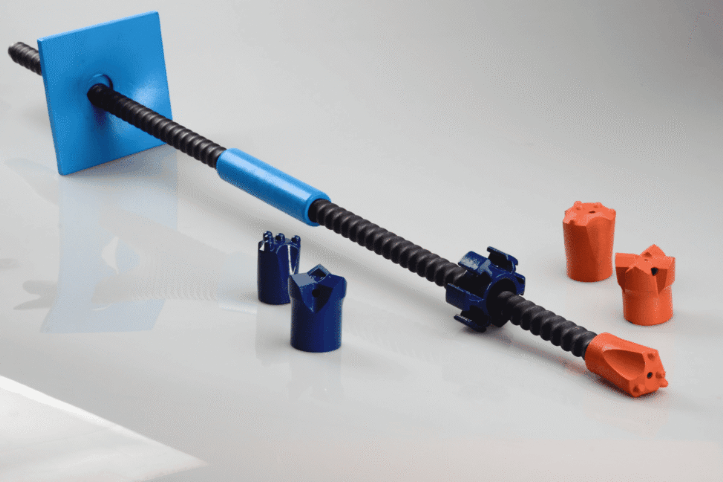

Self drilling anchor rock bolts have found their way into a fairly wide range of ground support applications, largely because they handle difficult ground conditions in ways that traditional anchoring methods struggle with. Understanding where this technology tends to get used in practice helps clarify why it has become a genuinely important tool in geotechnical and mining engineering rather than just a niche alternative to more established methods.
Mining Operations in Fractured Ground
Underground mining often involves working through rock that is naturally fractured or has been disturbed by previous excavation activity nearby. In these conditions, maintaining a stable pre drilled hole long enough to insert a traditional bolt can be genuinely difficult. SDA rock bolts are frequently used in mining specifically because the combined drilling and anchoring process avoids the risk of hole collapse in this kind of unstable ground, which matters a lot for both safety and installation efficiency in an active mining environment.
Tunnel Support During Construction
Tunneling projects regularly encounter varying and sometimes unpredictable ground conditions as excavation progresses, and the ability to install reliable ground support quickly, without waiting for a separately drilled hole to be confirmed stable, is a genuine practical advantage. This is part of why SDA systems have become common in tunnel support applications, particularly in sections where ground conditions are known to be less predictable than the surrounding rock.
Slope Stabilization Projects
Slopes with loose or weathered surface material present a similar challenge to fractured rock underground. A pre drilled anchor hole on an unstable slope can degrade quickly, sometimes before installation can even be completed. Self drilling systems address this directly, which has made them a common choice for slope stabilization work in areas where surface conditions are not fully consistent or predictable across the site.
Foundation Support in Challenging Soil
Some foundation projects, particularly those involving weak or variable soil conditions, benefit from the same core advantage that makes SDA rock bolts useful in mining and tunneling. Where traditional pre drilled anchoring methods risk hole instability, a self drilling approach can provide more reliable installation, though the specific engineering requirements for foundation applications differ meaningfully from those in mining or tunneling contexts and need to be assessed separately.
Emergency and Time Sensitive Stabilization Work
In situations requiring urgent stabilization, such as addressing an active slope failure or unstable excavation, the installation speed advantage of self drilling systems becomes particularly valuable. Being able to install reliable anchoring quickly, without the delays associated with separate drilling and anchor insertion steps, can matter significantly in time sensitive stabilization scenarios where every hour of delay increases risk.
Choosing the Right Specification for Each Application
While the applications above share a common underlying advantage, the specific sda rock bolt specification needed varies significantly depending on the load requirements, ground conditions, and expected service life of a given project. A specification well suited to underground mining support may not be the right choice for a surface slope stabilization project, which is why proper engineering assessment for each specific application remains essential regardless of how well established the general technology is.
See also: How UK Businesses Can Cut Costs by Switching Business Electricity Suppliers
Recognizing When This Technology Fits a Project
The common thread across all of these applications is ground instability or time pressure that makes traditional two step anchoring methods riskier or less practical. Recognizing these conditions early in project planning helps teams choose the right anchoring approach from the start, rather than discovering mid project that a traditional method is struggling to perform reliably in ground conditions it was never well suited to in the first place.
Given how widely this technology gets applied across such different environments, it is worth remembering that no two projects are identical, even when they fall under the same general category of application, which keeps proper site specific engineering assessment relevant no matter how familiar the general use case might seem at first glance.


 By
By