A Tacoma matter in federal court can involve witnesses scattered across nineteen counties. The Western District of Washington reaches from Clallam and Jefferson on the Olympic Peninsula to Skamania and Clark along the Columbia River, with Pierce, King, Kitsap, Thurston, and Snohomish in between. Getting six witnesses and four attorneys into one downtown conference room on the same morning is sometimes possible. Often it is not worth what it costs to arrange.
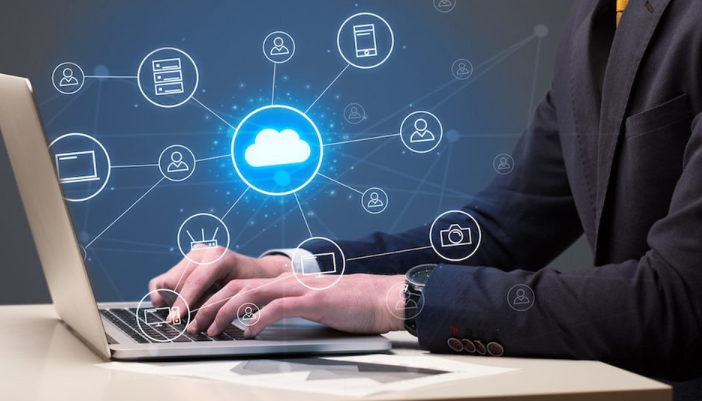
That is the practical case for remote deposition services in Tacoma. It is not primarily about avoiding travel. It is about removing scheduling as the constraint that determines how fast discovery moves.
What Changed and What Stayed the Same
NAEGELI Deposition and Trial pioneered remote deposition technology before it became standard practice. When courthouses closed during the COVID-19 pandemic, that infrastructure allowed depositions to proceed, and founder Marsha J. Naegeli has framed the period as evidence that the judicial system can adapt without stalling active cases.
The adoption stuck because the arithmetic held up after the emergency passed. What did not change is the legal substance. A remote deposition is still a deposition. The oath is still an oath. The transcript still becomes the record an appellate court reads.
That last point deserves emphasis, because the technology can create a false impression of informality. A witness appearing from a home office in Bremerton is under the same obligation as a witness in a conference room on Pacific Avenue, and the transcript carries the same weight.
The Oath Question Nobody Should Skip
This is where remote proceedings in Washington require specific attention. Under RCW 5.28.010, every court, judge, clerk of a court, state-certified court reporter, or notary public is authorized to take testimony in any action, suit, or proceeding. A state-certified court reporter can administer the oath.
Washington also requires certification as a threshold matter. Under RCW 18.145.010, no person may represent themselves as a court reporter without first obtaining a certificate, and digital court reporters are not court reporters or certified court reporters under the existing definition in Washington law.
Remote formats make it easier to lose track of who is actually doing what. The person hosting the video platform is not necessarily the person swearing the witness. Before the proceeding, establish which certified reporter will administer the oath and confirm that reporter’s Washington certification is current with the Department of Licensing. Requirements for oath administration, witness identification, and exhibit handling also vary by court and by order, so check what applies to your matter.
Exhibit Handling Is the Part That Goes Wrong
Ask anyone who has run remote depositions badly and this is the answer. Paper exhibits in a conference room have an obvious workflow: hand the document to the witness, mark it, move on. Remote proceedings need that workflow rebuilt deliberately, and teams that improvise it mid-deposition lose time and clarity.
Decisions to make in advance. Who introduces exhibits and how they reach the witness’s screen. Whether exhibits are pre-marked or marked live. How an objection to an exhibit gets captured in the record. Whether the witness can see a document and the questioning attorney simultaneously. Who holds the exhibit file when the proceeding closes.
NAEGELI’s copying and scanning services handle Bates stamping, high-speed digitizing, and OCR processing, which is what makes a large exhibit set workable in a remote format. A scanned and OCR-processed set is searchable. A stack of photographs of documents is not.
Video Synced to the Transcript
Legal videography is where remote depositions produce a durable asset rather than just a completed task. NAEGELI syncs deposition video to the transcript, with keyword search and exportable clips included.
The synchronization matters at trial for a reason that has nothing to do with technology. A jury watching a witness hesitate, look away, and then contradict earlier testimony responds differently than a jury hearing counsel read the same words from a page. Demeanor is part of what the video preserves and the transcript cannot.
See Also: Why the Check-In Inventory Matters When Cleaning Before You Move Out
Keyword search across synced video changes trial preparation as well. Instead of scrubbing through eight hours of footage to find the exchange you half-remember, you search the transcript text and the video moves to that timestamp. Exportable clips let a trial team assemble impeachment material without rebuilding it from raw footage.
For Tacoma matters, this connects to courtroom practice. Effective exhibits can make a real difference in how evidence lands, and NAEGELI’s trial support team assists in presenting clear visual representations of evidence to a judge or jury, handling design and organization. Testimony captured remotely months earlier becomes trial material without a separate production step.
Technical Groundwork Before the Proceeding
Connection quality affects the record, which makes it a legal issue rather than an IT issue. A dropped word in a critical answer is a gap in the transcript.
Reasonable preparation. Test each participant’s connection and audio in advance rather than at the start time. Establish a fallback if a connection fails mid-testimony, and agree in advance how a gap gets handled on the record. Confirm that the reporter can hear all participants clearly, since overlapping speech is harder to resolve remotely than in a room. Give the witness a quiet space free of interruption and confirm nobody is off-camera coaching. Agree on a protocol for objections so counsel is not talking over one another.
NAEGELI’s videographers arrive at least thirty minutes ahead of the scheduled start time with the tools requested for the assignment.
When to Use a Room Instead
Remote is not always the right call, and a provider willing to say so is worth more than one that is not.
Consider an in-person proceeding when the exhibit set is very large and physical handling is genuinely faster. When a witness’s credibility is central and counsel wants the room dynamic. When the witness struggles with the technology in a way that will consume the record. When an interpreter is involved and consecutive interpretation, which roughly doubles proceeding length, becomes harder to manage across a connection.
NAEGELI’s Tacoma office is downtown, a few blocks from Pierce County Superior Court and the Tacoma Municipal Courthouse, with conference rooms for depositions and arbitrations. Hybrid arrangements are also common, with the witness and reporter in the room and remote counsel appearing by video. The Tacoma location covers court reporting, legal transcription, videography, trial presentation, and legal interpretation, and dedicated case managers are reachable around the clock at (800) 528-3335 or schedule@naegeliusa.com.
What to Confirm When Booking
Which certified reporter will administer the oath and whether that certification is current in Washington. The exhibit protocol, including who marks and who holds the file afterward. Whether video will be synced to the transcript and whether that carries an additional charge. Turnaround for the transcript, in days rather than adjectives. Who is accountable for the assignment and how to reach them directly. Any court-specific requirements for remote testimony in your venue.
The litigation support services surrounding a deposition determine whether the record is usable later. Sorting the details at booking costs nothing. Sorting them afterward is not always possible.


 By
By