
Pond owners often assume that anything spraying water into the air must be handling aeration of the water. That assumption quietly damages a pond’s ecosystem over time. Fountains and aerators serve distinctly different purposes, and confusing one for the other means your water feature may look beautiful on the surface while struggling beneath it. That gap matters more than most people realize.
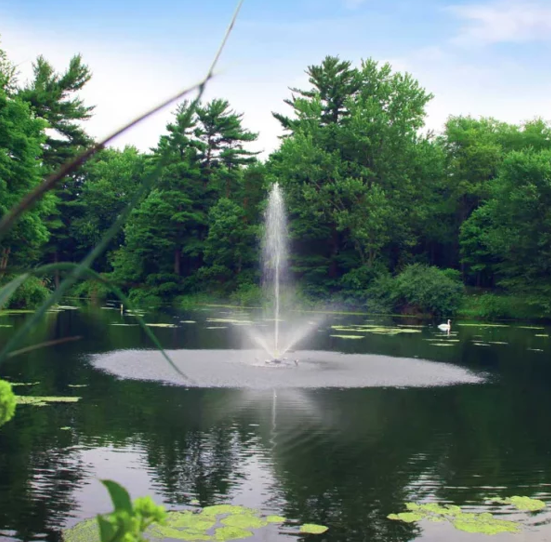
Floating pond fountains are surface-level devices that pull water up through a submerged pump and release it through decorative spray heads. They create visual appeal and introduce some oxygen at the water’s surface, and that motion discourages algae and mosquito activity. That said, their aeration capacity has real limits, especially as pond depth increases and the spray pattern becomes the dominant design priority rather than functionality.
Where the Water Moves and Why It Matters
Surface Motion Explained: The way each system handles water movement reveals a lot about its actual purpose. A fountain pulls water from just below the surface and releases it back down through a spray head, creating movement at the top layer. This introduces atmospheric oxygen where water and air meet. For shallow ponds under five or six feet, that surface motion can be enough to maintain reasonable water quality year-round.
The Layering Problem in Deeper Water: Ponds beyond a certain depth develop thermal stratification, where warm water sits on top and colder, denser water stays below. These layers resist mixing on their own, which means oxygen-rich surface water rarely reaches the lower zones. Gases accumulate near the bottom, and fish that spend time in deeper areas can experience real stress. A fountain simply cannot reach far enough down to address this problem effectively.
What the Numbers Actually Show: The practical difference in dissolved oxygen delivery between a surface fountain and a sub-surface aerator becomes noticeable in ponds over six feet deep. Fish require adequate oxygen throughout the full water column, not just near the spray zone. Ponds with heavy fish loads or significant algae pressure are the ones most likely to show early signs of oxygen deficiency when only surface-level equipment is doing all the work.
The Design Logic Behind Decorative Pond Fountains
Smaller Ponds and the Fountain Advantage: A fountain earns its keep in smaller, shallower ponds where depth stays under five or six feet. In those conditions, the circulation a spray system creates often covers the full water column without needing extra help. The visual benefit pairs naturally with the functional one, and for garden ponds or decorative water features, that combination is frequently all that is needed for a healthy, attractive setup.
When Aesthetics and Function Align: There is a real case to be made for choosing a fountain in settings where appearance is the primary goal. Residential garden ponds, courtyard water features, and small decorative installations all fit that profile. These environments benefit from the movement and sound a fountain provides, and the mild water circulation keeps the surface clear and inviting without requiring elaborate equipment or intensive ongoing technical management.
See also: Technology as a Catalyst for Business Growth
When Surface Movement Falls Short
Reading the Warning Signs Your Pond Sends:
- Fish gasping near the surface signals low oxygen levels in the lower water column.
- Persistent foul odors rising from the water suggest trapped gases near the pond floor.
- Algae blooms that return quickly after treatment point to inadequate circulation below the surface.
- Murky water that resists clearing despite regular maintenance often indicates poor deep-water oxygen exchange.
- Lethargic fish during warm summer months can reflect heat stratification and bottom-zone oxygen depletion.
Sub-Surface Aerators and What They Actually Do: Aerators designed for deep-water use push compressed air through diffuser plates resting on the pond floor. Fine bubbles travel upward through the entire water column, carrying oxygen-depleted bottom water toward the surface in the process. This creates a full-column exchange that a spray fountain simply cannot replicate. Ponds with fish populations or significant organic load are the ones that benefit most from this kind of dedicated system.
Matching Equipment to Pond Behavior: Not every struggling pond shows clear warning signs right away. Seasonal shifts, particularly summer heat, tend to push stratification to its worst point. If fish seem slow in August and water clarity drops without an obvious cause, a sub-surface aerator may be what the pond actually needs rather than another fountain upgrade. Behavioral patterns in fish and plants tend to be more reliable diagnostic tools than surface appearance alone.
When Both Systems Belong in the Same Pond
The Case for Running Both Together: Some ponds benefit from pairing a fountain with a sub-surface aerator at the same time. The fountain handles surface aesthetics and light aeration while the aerator manages deep-water oxygen exchange. This combination works especially well in medium-to-large ponds with active fish populations, where neither system alone covers every functional need and visual appeal still matters to the pond owner.
Getting Placement and Sizing Right: Placement affects performance more than most buyers anticipate. A fountain sized too large for a small pond over-circulates the water and can stress fish unnecessarily. An aerator positioned too close to the edge will miss the deepest zones where oxygen is most needed. Getting both systems right means thinking carefully about the pond’s specific depth, geometry, and biological load before making any equipment decisions.
The Pond You Deserve Starts With the Right Choice
Understanding what each system does, and where its limits are, gives you a real advantage in keeping a pond healthy and visually appealing through every season. Whether the goal is a decorative spray feature, deep-water oxygenation, or a combination of both, the right equipment makes a measurable difference. Explore available fountain and aeration options today to find the configuration that fits your pond’s specific depth, size, and long-term needs.


 By
By