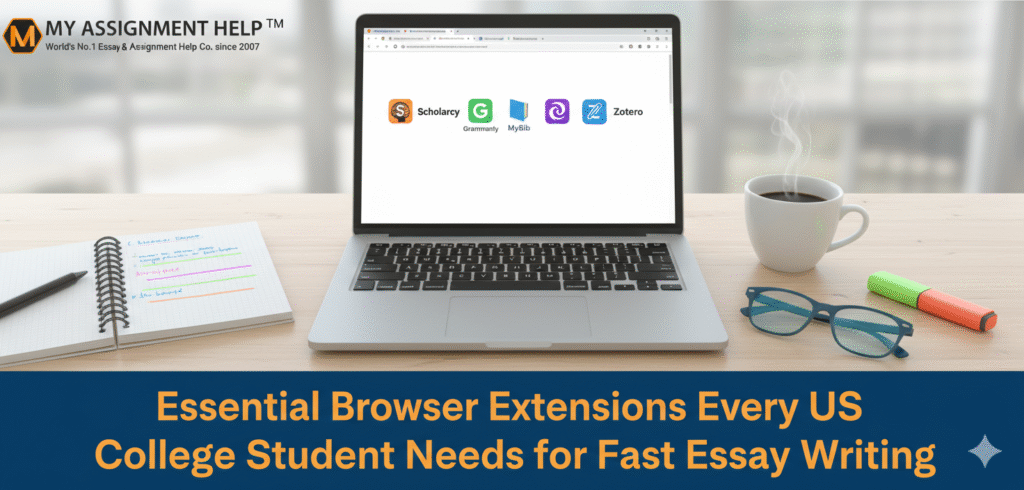
In the competitive landscape of US higher education, the difference between an ‘A’ and a ‘B’ often boils down to time management. With the average full-time college student in the United States spending only about 14 to 15 hours per week on actual academic preparation—a significant drop from decades past—efficiency is no longer optional; it is a survival skill (NSSE, 2024).
Between part-time jobs, internships, and extracurriculars, the “midnight oil” is burning faster than ever. Fortunately, the browser is no longer just a portal to distraction; it has evolved into a sophisticated academic workstation. By leveraging specific browser extensions, students can automate the most tedious parts of research and drafting, allowing them to focus on critical analysis and narrative flow.
The Anatomy of an Efficient Writing Workflow
Writing a high-quality essay involves three distinct phases: Research, Drafting, and Referencing. Manually navigating these steps is where most students lose hours of productivity.
- Research: Sifting through JSTOR, Google Scholar, and various .gov databases.
- Drafting: Overcoming “blank page syndrome” and maintaining grammatical integrity.
- Referencing: Ensuring APA, MLA, or Chicago styles are followed to the letter to avoid accidental plagiarism.
If you find yourself stuck at the very beginning of this process, staring at a blinking cursor, mastering the art of the “hook” is your first priority. Learning from essay hook examples can provide the spark needed to transform a dry topic into a compelling narrative. However, once that spark is lit, you need the right digital tools to keep the fire burning without burning yourself out.
For those moments when the workload feels insurmountable despite using the best tools, seeking essay writing service online can provide a necessary safety net. Many students in the US utilize these services not just for the final product, but to understand the structural nuances required by top-tier universities.
1. Research & Summarization Extensions
The research phase is often the most time-consuming. These extensions help you digest information at 2x speed.
Scholarcy
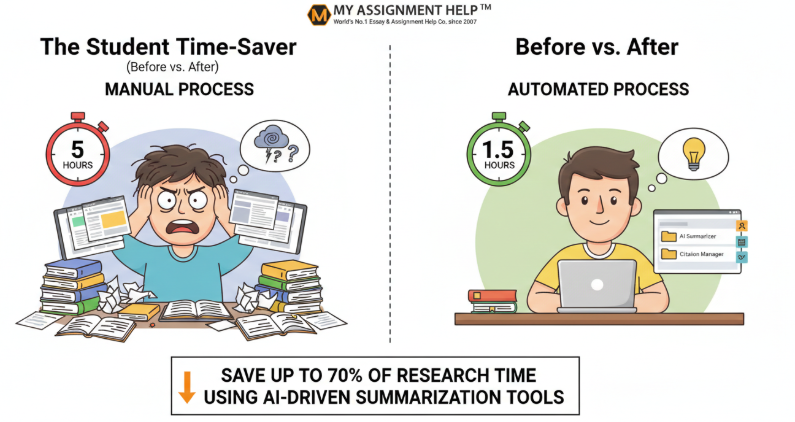
Scholarcy is an AI-powered tool that “reads” research papers for you. It breaks down long-form articles into “Summary Flashcards,” highlighting key findings, limitations, and even the references used.
- Why it works: It can save up to 70% of the time usually spent on literature screening.
Weava Highlighter
Unlike standard PDF readers, Weava allows you to highlight websites and PDFs directly in the browser and organize them into folders.
- US Student Impact: Essential for those juggling multiple subjects, as it keeps your sources organized by “Chemistry Lab Report” or “Sociology Term Paper” automatically.
2. Writing & Clarity Tools
In the US, “Clarity and Conciseness” are the hallmarks of academic writing. These tools ensure your tone remains scholarly.
Grammarly (Authorship Feature)
Beyond just checking for commas, Grammarly’s new Authorship feature (launched in April 2025) helps identify AI-generated vs. human-written text in Google Docs.
- Pro Tip: Use it to ensure your “voice” remains consistent and that you aren’t over-relying on LLMs, which many US professors now scan for.
WordTune
If you have a great idea but it sounds “clunky,” WordTune offers alternative ways to rewrite sentences. It helps you shift from a casual tone to a formal academic tone with one click.
3. The Citation Saviors
Referencing is the #1 cause of lost points in US colleges. These tools automate the pain.
MyBib: Free Citation Generator
MyBib is a breath of fresh air compared to ad-heavy sites like EasyBib. It’s a clean, open-source extension that generates APA 7th ed., MLA 9, and Chicago citations instantly from any webpage.
- Data Point: Using a citation manager has been shown to improve efficiency by 78% among academic researchers (Journal of Academic Librarianship).
Zotero Connector
The gold standard for serious researchers. With one click, Zotero saves all the metadata of a source (author, date, DOI) into your local library, making it the ultimate tool for senior theses.
Comparative Analysis: Free vs. Paid Extensions
| Extension | Primary Function | Best For | Price |
| Grammarly | Grammar & Tone | Polishing Drafts | Free (Premium Available) |
| Scholarcy | AI Summarization | Fast Literature Review | Paid (Limited Free) |
| MyBib | Citation Generator | Rapid Bibliographies | 100% Free |
| Weava | Organization | Multi-source Research | Free (Basic) |
Key Takeaways for US Students
- Automate the Mundane: Use MyBib or Zotero for citations; never format a bibliography manually again.
- Summary over Sifting: Use Scholarcy to decide if a 30-page paper is worth reading in under 2 minutes.
- Protect Your Integrity: Use the Grammarly Authorship tool to ensure your work meets the latest US university AI policies.
- Start Strong: Always use a “hook” to engage your reader from the first sentence.
See also: Bringing Natural Light to Flat Roof Buildings with Modern Rooflight Design
FAQs
Q: Can these extensions help with plagiarism?
A: Yes. Tools like Grammarly and MyBib help by identifying unoriginal text and ensuring that every source is correctly attributed in the proper format, which is the best defense against accidental plagiarism.
Q: Are these tools allowed by US universities?
A: Most “assistive” tools like Grammarly and Zotero are encouraged. However, always check your specific syllabus regarding “Generative AI” tools like WordTune, as policies vary by institution.
Q: Do these extensions work on all browsers?
A: While most are designed for Chrome, many are available on Firefox, Edge, and Safari. Chrome remains the best choice for the widest variety of academic extensions.
References & Further Reading
- National Survey of Student Engagement (2024). “NSSE Snapshot.” Indiana University Center for Postsecondary Research.
- Grammarly (2025). “Grammarly Authorship: Fostering Transparency in the AI Era.”
- Scholarcy (2024). “Quantifying Productivity in Academic Research: A User Study.”
About the Author:
Dr. Sarah Miller is a Senior Academic Strategist at MyAssignmentHelp. With over 10 years of experience in US higher education and a PhD in Educational Technology, she specializes in helping students bridge the gap between technical software and academic excellence. Her mission is to empower students with tools that reduce stress and elevate the quality of their scholarly work.

 By
By