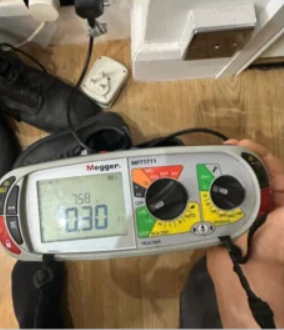

An Electrical Installation Condition Report (EICR) provides a detailed assessment of the condition of an electrical installation in any given property. Whether carried out in a home, rental property or commercial premises, the inspection helps identify areas that may require attention while providing an overview of the installation’s safety and condition.
One of the most important sections of an EICR is the list of observation codes. These codes are used by the inspecting electrician to classify any issues found during the inspection. Rather than simply listing faults, the report uses a standard coding system that indicates the level of attention each observation requires.
For property owners seeking an EICR certificate in London, understanding these observation codes can make it much easier to interpret the report and plan any recommended work.
Why Observation Codes Are Used
An EICR involves both a visual inspection and electrical testing of the installation. During the inspection, the electrician may identify issues ranging from minor recommendations to more serious concerns.
Observation codes provide a consistent way of recording these findings. Instead of relying on lengthy explanations alone, each issue is assigned a recognised code that communicates its significance.
This standardised approach allows property owners, landlords, managing agents and electricians to understand the report more easily while helping prioritise any work that may be required.
See also: Emergency Possum Removal – 24/7 Rapid Response Wildlife Control Services
Understanding the Main Observation Codes
Modern EICRs generally use four primary observation codes:
- C1 – Danger Present
- C2 – Potentially Dangerous
- C3 – Improvement Recommended
- FI – Further Investigation Required
Each code has a different meaning and reflects the condition identified during the inspection. Understanding the differences between these classifications helps property owners interpret the report correctly rather than assuming that every observation carries the same level of importance.
C1 – Danger Present
A C1 observation indicates that the electrician has identified a situation where immediate action is necessary because danger is present at the time of inspection.
When this type of observation is recorded, the inspecting electrician will usually make the affected part of the installation safe before leaving the property whenever possible. Temporary isolation of the affected circuit may be necessary until permanent remedial work can be completed.
Because a C1 observation identifies an immediate safety concern, the overall EICR will not receive a satisfactory outcome until the issue has been addressed.
Fortunately, not every EICR contains C1 observations, but understanding their significance highlights the importance of regular inspections.
C2 – Potentially Dangerous
A C2 observation indicates that, although immediate danger may not exist at the time of inspection, the condition has the potential to become dangerous if left unresolved.
This classification means that remedial work is recommended to restore the installation to an appropriate standard. While the situation may not require the same immediate response as a C1 observation, it still requires prompt attention.
A report containing one or more C2 observations is also classified as unsatisfactory until the recommended corrective work has been completed.
Understanding the difference between C1 and C2 helps property owners appreciate that both codes require action, even though the urgency may differ.
C3 – Improvement Recommended
A C3 observation is different from C1 and C2 because it does not indicate that the installation is unsafe.
Instead, it identifies an area where improvements could enhance the overall safety or performance of the electrical installation. These observations often relate to changes in current standards or opportunities to upgrade older components that continue to function satisfactorily.
A property may still receive a satisfactory EICR even when C3 observations are recorded, provided no C1, C2 or FI observations affect the overall assessment.
Although improvement recommendations are not mandatory, many property owners choose to address them during future maintenance or renovation projects.
FI – Further Investigation Required
Occasionally, the inspecting electrician may identify a condition that cannot be fully assessed during the inspection.
In these situations, the report may include an FI observation, meaning that further investigation is required before the condition can be fully evaluated. Additional testing or examination may be needed to determine whether remedial work is necessary.
An FI observation does not automatically confirm that a fault exists. Instead, it indicates that more information is needed before an accurate conclusion can be reached.
Because the condition remains unresolved, reports containing FI observations are generally considered unsatisfactory until the recommended investigation has been completed.
How Observation Codes Affect the Overall Result
After the inspection is complete, the electrician determines whether the installation receives a satisfactory or unsatisfactory result.
An EICR is normally considered satisfactory when no C1, C2 or FI observations are recorded. The presence of C3 recommendations alone does not usually prevent a satisfactory outcome.
If the report contains C1, C2 or FI observations, the installation is generally classified as unsatisfactory until appropriate remedial work or further investigation has been completed.
This overall assessment provides property owners with a clear summary of the installation’s condition while identifying whether further action is required.
Why the Codes Help Prioritise Maintenance
Electrical installations naturally experience wear over time. An EICR helps identify these changes while allowing maintenance to be planned in a logical order.
Observation codes make this process easier because they clearly distinguish between issues requiring immediate attention and those that can be scheduled as part of future maintenance.
For example, C1 and C2 observations usually become the highest priority, while C3 recommendations may be incorporated into planned electrical improvements at a later stage.
This structured approach helps property owners manage maintenance more effectively while maintaining electrical installations in good condition.
Observation Codes Should Always Be Read With the Full Report
Although the observation code provides an important summary, it should not be viewed in isolation.
Each observation is accompanied by additional comments describing the issue identified during the inspection. Reading the complete explanation provides valuable context about the location, nature and recommended action for each observation.
The report may also include details about testing results, circuit condition, consumer unit inspection, earthing arrangements and bonding, all of which contribute to the overall assessment.
Reviewing the entire report provides a much clearer understanding than focusing solely on the observation codes themselves.
Regular EICRs Help Monitor Electrical Installations
Electrical installations gradually change as properties age, circuits are modified and equipment continues to be used.
Periodic EICRs provide an opportunity to identify developing issues before they become more significant. Observation codes also allow property owners to compare reports over time, helping monitor the condition of the installation and plan future maintenance more effectively.
For landlords, homeowners and commercial property managers, regular inspections provide useful information for maintaining electrical systems throughout the life of the property.
Conclusion
Observation codes are one of the most important parts of an Electrical Installation Condition Report because they provide a clear and consistent way of classifying the findings of an inspection. Understanding the meaning of C1, C2, C3 and FI observations allows property owners to interpret their reports with greater confidence.
While C1 and C2 observations require remedial action, C3 recommendations identify opportunities for improvement, and FI observations indicate that further investigation is needed before a final assessment can be made. Together, these codes help prioritise maintenance and support informed decision-making.
For anyone arranging an EICR certificate London, understanding these observation codes makes it easier to read the report, plan any necessary work and maintain the electrical installation as part of a long-term property maintenance programme.


 By
By